Morgan Quaintance discusses the making of a new film and the exhibition 'I'll Always Remember...' with curator Alice Butler
02 October — 22 November 2026
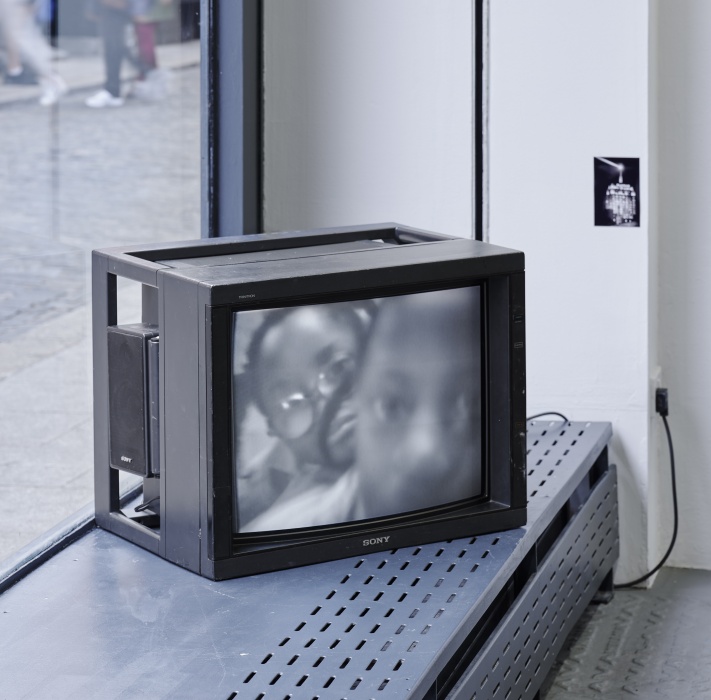
Exhibiting artist and filmmaker Morgan Quaintance speaks to Creative Director and co-founder of aemi Alice Butler about his new film Bourdieu
At the time I had in the back of my mind the idea of taking as an object of analysis a universe of which I had familiar knowledge. I thought it would be interesting to do a kind of ‘Tristes Tropiques’ [Claude Levi-Strauss’s anthropological memoir published in 1970] but in reverse: to observe the effects that the objectification of my native world would produce in me.
Pierre Bourdieu, An Invitation to Reflexive Sociology (1992)
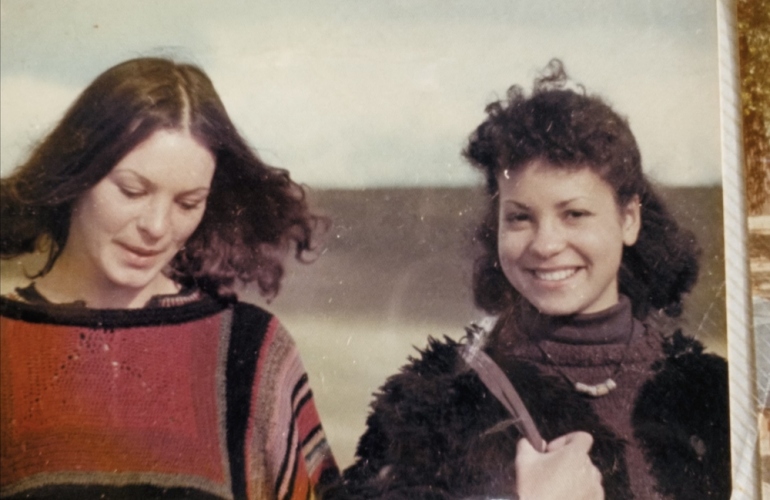
AB: I wanted to start by asking about portraiture. For a long time I’ve been interested in experimental approaches to portraiture, particularly instances where a portrayal of a figure is complicated by a degree of self-portraiture. We talked about this in relation to your 2021 film Surviving You, Always, but it’s also something I think about with Early Years (2019), your film about Jamaican-born artistic polymath Barbara Samuels in which you never disclose that she is your mother. In the case of this exhibition and your new film, the French sociologist Pierre Bourdieu (1930-2002) features prominently. Can you talk a little about the role of portraiture in your practice, whether this has shifted at all with this exhibition and how your perspective on Bourdieu’s work on the dynamics of power intersects with your own biography in the exhibition?
MQ: That’s a good place to start! My initial concept for Bourdieu was to make it a biographical film with a difference. Rather than doing a straightforward documentary retelling of Pierre Bourdieu’s life, I was going to make a film that went about illustrating or exploring his ideas through specific sets of socio-cultural conditions or events. From that very wide remit, my focus, over the course of gathering materials and starting to shoot footage, honed in on one particular aspect of his theoretical toolkit and that was the notion of reflexivity. The scenario which best illustrated that particular conception was the experience of being in another country (which was Chicago for me, where I visited annually as a child and lived for one year with my grandmother in 1989) and that seemed to align with Bourdieu’s own experience in Algeria, which, if I understand it correctly, alerted him to the importance of a reflexive consciousness in sociological work.
If I think about my approach to portraiture in the examples you’ve mentioned, you can see there’s been a process of evolution. It’s something that’s mirrored in my entire practice I’d say. What happens is that I move from a kind of naturalistic encounter with biography, in the case of Early Years, to a practice in which biography is being instrumentalised and made to do a number of things simultaneously.
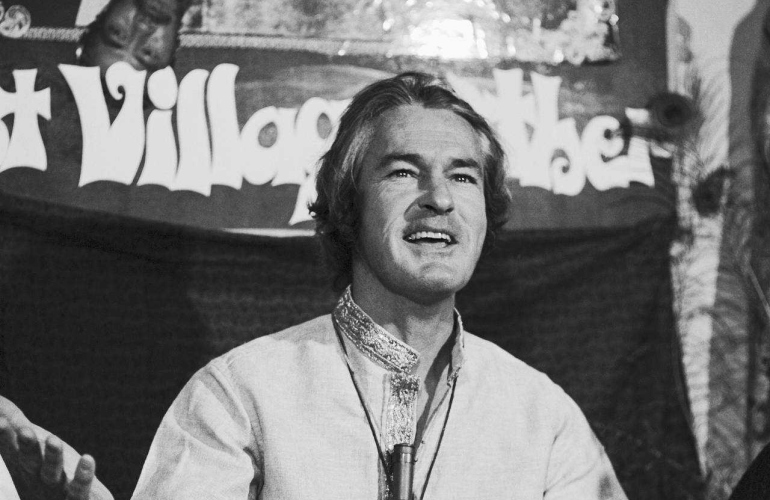
For example in Surviving You, Always, that film really isn’t a confessional about my teenage years on acid. I mean that’s in there, but that episode in my life has been used for the structural, critical and aesthetic possibilities that are inherent in it. It was a way to explore an array of quite complex socio- cultural, economic, formal and political things across a linear and digestible narrative. One aspect of that was the film’s engagement with the legacy of Californian orientalism, which is still driving a lot of the Western discourse about psychedelics and spiritualism. I was able to undermine that, or at least put it into a lively form of dialectical contention, by using the voices of Harvard psychologists and drug researchers Timothy Leary and Ram Dass against my own story of urban disorientation where the set and setting were as far as you can get from the pillows and pranayama of a bourgeois psychedelic ideal.
Now with Bourdieu, it’s another exercise in extracting use from my biographical particulars, but also an exercise in abstracting them as well. At a formal level, I wanted to use my experience as a way to generate a series of images, impressions and juxtapositions that would (by virtue of them coming from my own history) also hopefully be novel. So again, it’s not this kind of narcissistic or self-important telling of ‘my truth’, rather my experience is just the device that enables me to plot a route through a very specific set of conditions, forms, sounds, and compositional formats. With that in mind, and thinking about your question again, the notion of portraiture felt quite alien to me when I was thinking about how to answer it, even though there are definite elements of portraiture in the work I make. In the end though, I think portraiture for me is a structural approach that I want to stretch and twist and turn and manipulate, rather than an exercise in capturing the essence of someone or something through a faithful mimetic rendering on film. That’s how I feel at the moment anyway. Of course once you say these things out loud, the mind has a way of
changing itself.
AB: One of the many ways that this exhibition and your new film feel exciting to me is through your use of segmentation as a formal strategy. Perhaps the most obvious example of this in the exhibition is the steel barrier adjoined to each of the two pillars in the centre of the Gallery, effectively slicing the middle of the room in two. Segmentation is also used to thrilling effect in Bourdieu but it is plainly suggestive of something dark in social terms, evoking ideas of separation, exclusion, segregation. Can you talk about this productive tension in your work?
MQ: I really like the steel barrier and how it came about during my site visit to TBG+S. In some ways it’s a site-specific thing, as it really only occurred to me when I was walking through the space and getting a feel for it, plus it’s not something I could or would want to reproduce in a different location. I quite like working that way when it comes to exhibitions. From a curatorial perspective, these things tend to come out of trying to create a sense of dynamism in a given space so that I’m making the most of it and not just sticking to a very wall-based arrangement with everything hung at a uniform height. There’s a fairly improvisatory spirit to the decisions behind these things, but of course they’re made under the influence of the conceptual framework that’s colouring the way I’m looking at and considering the whole project.
In relation to the film, segmentation is making me think more of another word, which is zoning. Zones were and are a really prominent spatial phenomena in the cities I grew up in. Because of that they’ve always influenced my impressions of places and determined, explicitly or implicitly, where I could and couldn’t go within them. In that regard, the most intense encounter I’ve had with zoning was in Chicago in the 1980s. The segregation was comprehensive and, to me, quite extreme. Every neighbourhood seemed to be specifically demarcated for specific racial categories and this was obviously a very deliberate, historical and administrative process. London, by comparison and to a degree probably because of its compactness, has for me always been multicultural, you just tend to have a different base-level ethnicity in a given location.
For example, I currently live in Islington, which is a really really interesting area socio-culturally and economically speaking. It’s undoubtedly multicultural here, but with a white working class base: it’s evident in the area’s long-term demographic makeup, but also the specific linguistic and behavioural codes that dominate below a population of identikit affluent Europeans, young couples working in finance, and well-off singles new to the area. Then in South London, Brixton is multicultural with an Afro-Carribean base and Tooting is multicultural with a South Asian base. In Chicago, in the 1980s, it was completely different. There would be a ‘hispanic’ neighbourhood, a ‘black’ neighbourhood, a ‘white’ neighbourhood, and they were largely all (aside from a few locations that I never really went to) unrelenting wall-to-wall monocultures. One of the things that struck me about this was how the ethnicity of the people in billboard advertisements would change according to the demographics of the area. So you would have the same advert for cigarettes, but in one area they would be white models, in another they would be black, and in another still they would be hispanic.
AB: Some of the individual images, logos, objects in the show will feel recognisable to visitors of the Gallery and yet they are also uniquely subverted in every instance. Can you talk about some of the discrete elements in the show, maybe beginning with the customised varsity cardigan?
MQ: I was interested in revisiting the powerful impressions that logos and branding created for me when I was younger. I mean everything, from sports logos to official businesses and the like, seemed to have these arcane symbols that possessed their own intense magical power to attract and mesmerise. I think it’s because children can be quite sensitive and dreamy, and so they’re fairly attuned to the mythical register that advertising at some level speaks in, or at least, it did back then. So I really understood and ached for the whole set of ontological possibilities that were only seemingly attainable if I possessed the logos or images themselves, or rather I was acutely susceptible to the implantation of that desire by the commercial industry of advertising.
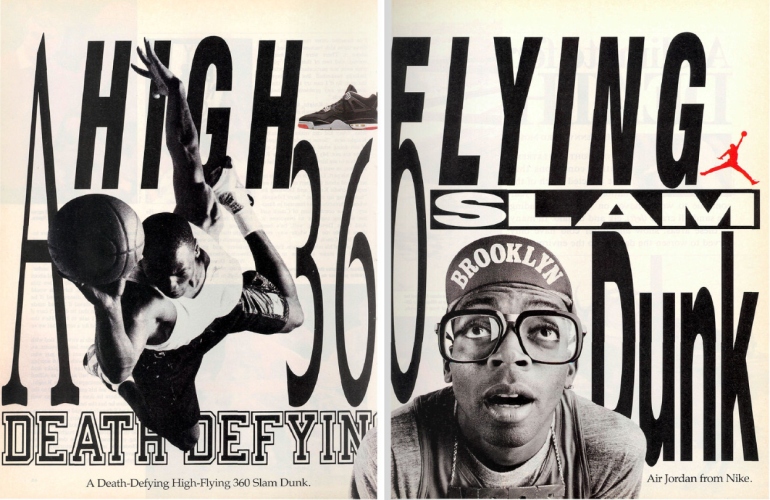
I remember being in Chicago in the late 1980s, around the first wave of Nike Air Jordan trainers that were selling for over $100, which was an insane amount of money at the time and made them almost cosmically out of reach for most people. There was a particular version of the shoe that did away with the Nike logo itself and I was just entranced by this erasure, you know the minimalist intention of it. I didn’t have the design vocabulary to express it in those terms then, but you could just sense it was a really radical thing to do, and I really wanted to possess or be a part of that radicality. So in the exhibition there’s an upside down Nike ‘swoosh’ logo which references this, but it also speaks to a misreading that many young people I knew made at the time too. There’s a brand of popular menthol cigarettes in Chicago called Newports, and the logo looks like an upside down Nike tick. So I remember us feeling somehow that Newports were related to Nike and vice versa, and that added another layer of mystery to the branding. Interestingly enough, did you know that menthol cigarettes are banned in both the UK and Ireland? Probably for the same reason that they were so attractive to the kids I knew in the 80s. The menthol made smoking much smoother.
With the varsity cardigan, that’s a direct riff on a vernacular design practice. Basically, Chicago street gangs in the 60s and 70s created their own varsity cardigans with gang-specific patches that observed strict formal conventions visible in a design language broadly restricted to medieval heraldry, gothic fonts, scroll banners and italic cursive scripts. A gang member’s blazer could tell the whole story of their set and so I sought to create one that partly told the story of the exhibition. It’s created with a set of patches, texts and emblems that speak to Bourdieu’s theory, the policing of social housing, and my own experience across London and Chicago.

AB: I didn’t know that about menthol cigarettes! I remember smoking them as a student when I was travelling, partly as an affectation, partly because I genuinely preferred them. The exhibition is calledI’ll Always Remember..., lifted from the title of Brenda Costanzo’s 2013 book about her experience growing up in Chicago’s Robert Taylor Homes, a colossal public housing development (once both the largest in the States and the world) made up of 28 high rises and 27,000 residents. The complex was named after Robert Taylor, a housing advocate, a banker and the first black student to enroll at Massachusetts Institute of Technology in 1888. Can you talk about what feels unique to you about the relationship and proximity between the university and the Taylor Homes?
MQ: I actually didn’t know that about the real Robert Taylor’s biography! Funnily enough, it’s in keeping with that practice of naming social housing complexes after significant people, but at least Robert Taylor had some relevance. I remember council estates in the UK with oddly incongruent names like Mozart in Ladbroke Grove and Pablo Neruda Close in Brixton.
So the Robert Taylor Homes weren’t that near to the University of Chicago, but it was about a thirty-minute walk to the part of State Street where the complex started or finished (depending on which direction you came). I walked it once, but it wasn’t really the sort of thing that people would do, and it would’ve definitely been considered seriously dangerous in the 1980s.
They’re wildly different parts of town, economically speaking, and I think usually if that sort of trip was taken it’d be done by car. For me though, the proximity of the two places is psychologically and experientially close because my grandmother, Eddie Lee Quaintance, taught at an elementary school I attended in 1989 called Mary C Terrell School, which closed down ages ago and was next to the Robert Taylor Homes. Its student body was, I think, entirely made up of kids who were living there. My grandmother’s apartment was in a place called Hyde Park which was about forty-minutes walk away, and about a fifteen minute walk from the University of Chicago, so we’d drive past the university grounds on our way to or coming back from State Street each school day. That’s why the university and housing complex partly represent two extremes of the urban spectrum I was exposed to at that time.
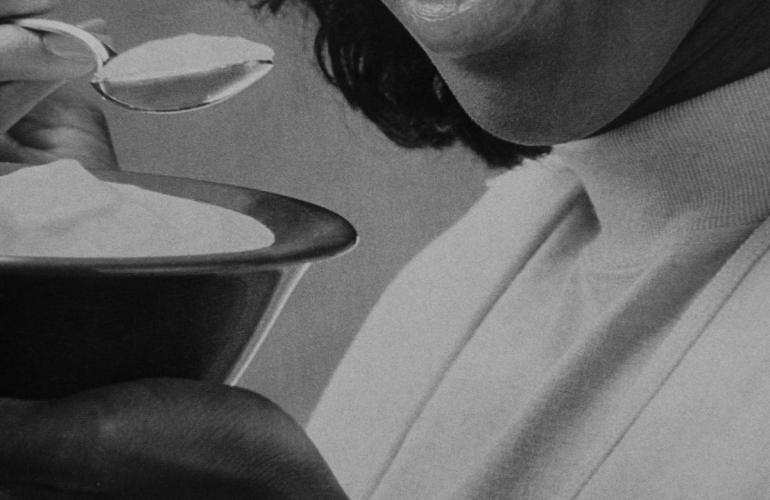
In the film Bourdieu, the university and housing complex become these totemic, almost supernatural entities with a powerful magnetic force. In the loose narrative driving the film forward they’re the two polarities drawing events back and forward in time, from the decade just before I arrived, right up until last year when I was flown over to the University of Chicago for a job interview in the Fine Art department. I really had no desire to teach at all, but I was seduced by the money and the thought of making a romantic return as the inheritor of my grandmother’s legacy (who taught for decades) and had died in 2002. Anyway the university was horrible, for some of the reasons listed in the film and for others that I’ll tell people about if they ask me.
AB: I am interested in talking to you about the relationship between the exhibition and the film you have made from the same body of research. I’m keenly aware however that they are each experiences and individual works in their own right that can be fully appreciated in isolation. Would you say though that making these two projects together have influenced the form each of them have taken? Would you, for example, describe the exhibition as filmic in any way? I am thinking of the music that comes in and out at staggered intervals and also the use and typeface of the wall text, still images and archive footage dispersed across the space in ways that feel like an edit. Is this an overreach?
MQ: I’d definitely say the making of one influenced the other. I’m not sure I’d describe the exhibition as filmic necessarily, but it’s a totally legitimate interpretation. With the sounds in the Gallery, I’ve been drawn to having music segue in and out at intervals as a kind of excitatory device for a while now. On one level, it’s about animating the space for the brief amount of time the music is playing, but silence is equally important. That’s why I don’t really create ‘playlists’ that go on without interruption, and also why there’s a significant amount of time between each piece of music playing. The audio is also time and location specific, for the most part. For example, that’s why I use the music of Big Black. They were a Chicago-based band in the 1980s that I listened to then.
AB: Is there anything else you would like visitors to know about this exhibition that I haven’t asked you about?
MQ: There’s loads more to talk about in the show and film, but I think that’s enough for here. One thing I’d like to add is a short explanation of the Bourdieu quote at the beginning of this interview. There’s this concept in Bourdieu’s writing that posits experiences of estrangement can awaken a sociological consciousness, which for him seems to be about activating a mode of critical circumspection concerning your environment. I’m obviously not wedded to this veneration of some ‘sociological perspective’ (whatever that may be), but I do think being out-of-place can make you hyper aware of the rules and procedures governing a given situation that are completely missed by individuals who are perfectly suited to those conditions and therefore experience a kind of frictionless relationship to them. What I think is valuable about Bourdieu’s encounter with Algeria (that is, his experience of environmental estrangement) is that it then alerts him to the rules and procedures governing his ‘native’ social situation in France, which hitherto appeared to him as natural and (in relation to Algeria) relatively frictionless.
This activated or newly switched-on critical awareness of one’s own environment, and then by extension the world, is the crucial element of ‘reflexivity’ that interested me and drove this entire project.
Morgan Quaintance’s practice eschews set themes. However, interests in the human condition, the cultic milieu, counterculture, ethnography and African-American, Afro-Caribbean, British, and East Asian histories are all mainstays. His work has been shown and exhibited at festivals and institutions including MOMA, New York; Konsthall C, Stockholm; Courtisane Film Festival, Ghent; and John Hansard Gallery, Southampton. He is the recipient of a number of awards for his work, most recently the 2025 Film London Jarman Award.
Alice Butler is Creative Director and co-founder of aemi. She is a film programmer, curator, lecturer, and writer. She has curated exhibitions and film seasons at The Dock, Carrick-on-Shannon; IFI, Dublin; and Hugh Lane Gallery, Dublin.